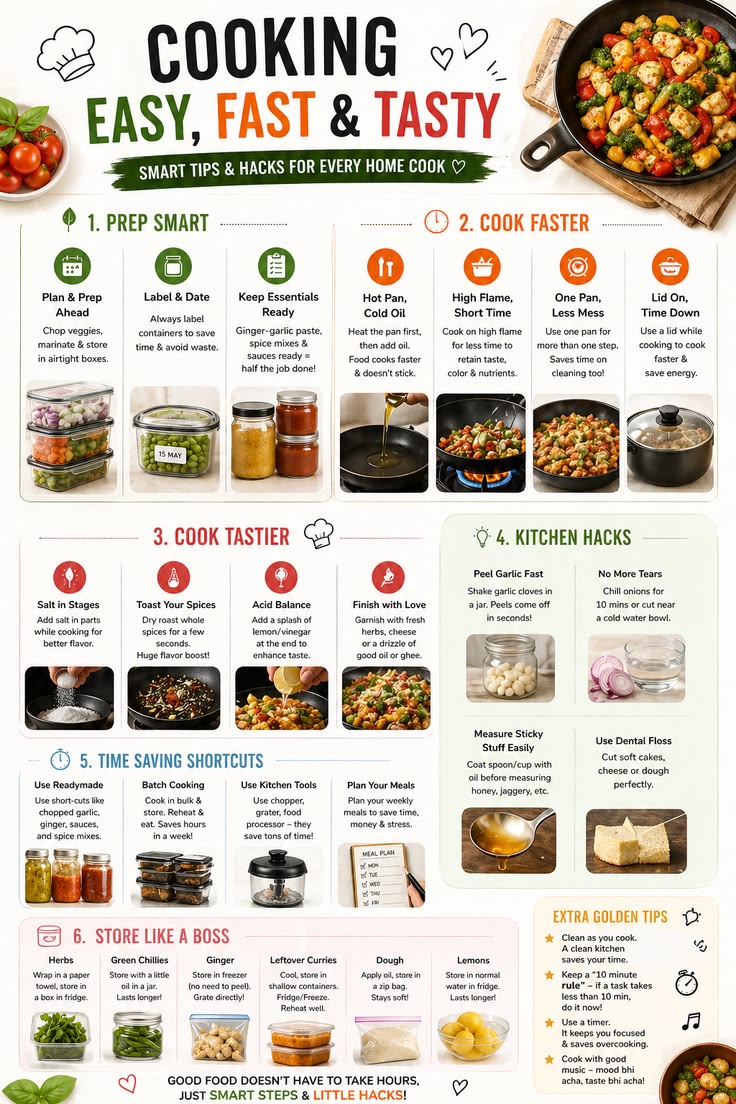
Cooking Hacks Every Beginner Should KnowForever
Introduction
Ever wondered why simple home cooking sometimes feels harder than it should? Cooking doesn’t need to be stressful or confusing when you understand a few smart basics. This guide on Cooking Hacks Every Beginner Should KnowForever is designed to make your kitchen time easier and more enjoyable. Why do some people cook effortlessly while beginners struggle with small mistakes? It usually comes down to a few simple tricks that nobody explains clearly at the start. I’ve picked up these habits over time in my own kitchen, and they’ve saved me from many ruined meals and wasted ingredients.
Why You Will Love This Recipe
Why do so many beginners give up on cooking too early? The truth is, they just don’t know the right shortcuts that make everything smoother. These Cooking Hacks Every Beginner Should KnowForever bring comfort to your kitchen routine by cutting stress and saving time. You’ll feel more confident with everyday meals, even on busy nights. Why worry about complicated steps when simple adjustments can fix most problems? These tips also help reduce food waste, improve flavor, and make leftovers more useful. It’s the kind of kitchen knowledge you’ll wish you had from day one.
Ingredients
What basic items actually help improve cooking results at home? A few simple kitchen essentials can completely change your cooking experience.
- Fresh onions – 4 medium (use 2 for small cooking practice, or double for larger families)
- Garlic cloves – 8 pieces (reduce to 4 for 2 people, increase as needed)
- Cooking oil – ½ cup (adjust slightly for smaller or larger portions)
- Salt – 2 teaspoons
- Black pepper – 1 teaspoon
- Basic spices (turmeric, chili, cumin) – 1 tablespoon total mix
- Fresh herbs (optional) – a small bunch
Instructions
Step 1: Preparation
Ever feel confused before even starting to cook? Begin by washing and chopping all ingredients before turning on heat. This keeps everything smooth and avoids last-minute panic. If cooking for 2 people, simply reduce all chopped ingredients by half to avoid waste and confusion during preparation.
Step 2: Main Cooking Process
Why does cooking sometimes burn or stick to the pan? Heat oil slowly on medium flame before adding onions and garlic. Stir gently until they turn light golden. For larger servings beyond 4 people, use a wider pan so ingredients cook evenly instead of overcrowding.
Step 3: Combining Ingredients
How do you know when spices are added correctly? Add salt, pepper, and spices slowly while stirring so flavors mix evenly. Watch the color and smell as your guide. For smaller portions, use slightly less spice to keep balance, and for more people, increase gradually instead of doubling suddenly.
Step 4: Finishing & Final Simmer
Why does food sometimes taste better after resting? Let everything cook together on low heat for a few minutes so flavors blend properly. Stir gently and check texture before turning off heat. For larger batches, increase simmer time slightly so everything heats evenly without rushing.
Why This Recipe Works for Busy Days
Why is it hard to cook after a long day? These Cooking Hacks Every Beginner Should KnowForever are designed for simple, quick decision-making in the kitchen. They help you avoid overthinking meals and reduce cleanup time. You can even prep ingredients earlier and cook faster later. Leftovers also store well, making next-day meals easier without starting from scratch.
Tips & Tricks
- Ever burned food because you rushed the heat? Always warm the pan slowly before cooking. High heat too early can ruin texture and flavor. For smaller meals, use lower flame control to avoid burning, and for larger meals, increase heat gradually while stirring continuously for even cooking results.
- Why does food sometimes taste bland even with spices? Spices need time to cook properly, not just mix. Add them early and let them release aroma in oil. For 2-person meals, use slightly less spice but still follow timing rules, and for larger portions, extend cooking time instead of adding too much spice.
- Do your vegetables turn soggy too fast? Overcooking is usually the reason. Keep an eye on color and softness instead of strict timing. Smaller portions cook faster, so reduce heat earlier, while larger portions may need a few extra minutes but still require gentle stirring to maintain texture.
- Why do beginners struggle with consistency? Measuring ingredients loosely causes imbalance. Try to follow simple portions at first. For fewer servings, divide ingredients evenly, and for more people, scale slowly instead of doubling instantly to maintain the same taste and texture quality across the dish.
Variations
- Meaty Version
Want a more filling option for family meals? Add chicken or beef pieces during the cooking stage after onions turn golden. This makes the dish richer and more satisfying. For 2 people, use smaller meat portions, and for larger gatherings, increase meat gradually to maintain balanced flavor and even cooking. - Vegetarian Option
Looking for a lighter, plant-based style? Replace meat with potatoes, carrots, or peas. These absorb spices beautifully and create a comforting texture. Adjust vegetable quantity based on servings, keeping smaller cuts for fewer people and slightly larger portions for group cooking to maintain consistency. - Ingredient Swap
Missing some ingredients in your kitchen? You can easily replace garlic with garlic powder or fresh onions with shallots. These swaps still maintain flavor balance. For small servings, reduce seasoning intensity, and for bigger meals, increase gradually while tasting as you go to avoid overpowering the dish. - Flavor or Herb Boost
Want your dish to taste fresher and more aromatic? Add coriander, parsley, or mint at the end of cooking. This gives a fresh lift to flavor. Use small amounts for 2 people and slightly more for larger groups, but always add at the end to keep the aroma strong.
Serving Suggestions
- Cozy Rice Bowl
Why not turn this into a complete comfort meal? Serve over warm rice with a light salad on the side. It feels filling yet simple. For smaller servings, keep rice portions light, and for larger groups, prepare extra rice so everyone gets a balanced plate. - Flatbread Pairing
Ever tried pairing it with soft flatbread? It absorbs flavors beautifully and makes the meal more satisfying. Adjust bread quantity based on serving size, keeping 1–2 pieces per person for smaller meals and slightly more for larger family dinners. - Light Soup Combo
Looking for something warm and comforting? Pair it with a light vegetable soup. It creates a cozy dinner combination. For fewer servings, one bowl of soup is enough per person, while larger groups may need a bigger pot to match the main dish quantity. - Party Style Plate
Want to serve it for guests? Present it with small bowls of dips and sides for a sharing-style meal. Keep portions controlled for small groups, but for larger gatherings, multiply servings evenly so everyone can enjoy the same balanced taste experience.
Storage Instructions
- Fridge Storage
How long can you safely keep leftovers? Store cooled food in airtight containers and refrigerate within two hours of cooking. It stays fresh for 2–3 days. For smaller portions, use shallow containers for faster cooling, and for larger batches, divide into separate boxes for better storage control. - Reheating
Ever had reheated food taste dry? Warm it on low heat with a splash of water or oil to restore texture. Stir gently while heating. Smaller portions reheat quickly, while larger portions may need gradual warming to ensure even temperature without burning edges. - Freezing
Can you freeze it for later use? Yes, freeze in sealed containers for up to one month. Thaw overnight before reheating. For single servings, freeze individually, while larger portions should be divided to avoid repeated thawing and preserve flavor quality. - Make-Ahead Tips
Want to save time on busy days? Chop ingredients and store them separately in the fridge a day before cooking. This works well for both small and large servings, just adjust quantities ahead so cooking becomes faster and stress-free when needed.
Recipe Timing
Prep Time: 15 minutes
Cook Time: 25 minutes
Rest Time: 5 minutes
Total Time: 45 minutes
Nutrition Information (Approximate)
Each serving may contain around 180–250 calories depending on ingredients used. Protein ranges from 6–12g per serving. This dish provides fiber, healthy fats, and essential vitamins from fresh ingredients. Values are estimates and may vary based on portion sizes and substitutions used in Cooking Hacks Every Beginner Should KnowForever.
FAQs
Why should I prep ingredients before cooking?
Prepping helps avoid confusion and burns during cooking. It makes the process smoother and faster.
What is the most common beginner mistake?
Using high heat too early is the biggest mistake. It burns food before it cooks properly.
Can I replace spices easily?
Yes, you can adjust spices based on what you have, but add slowly to maintain balance.
Why does my food turn watery?
Too much moisture from vegetables or rushing heat causes this. Cook slowly to reduce excess water.
How do I store leftovers safely?
Use airtight containers and refrigerate within a few hours to maintain freshness and taste.
Can I adjust flavor after cooking?
Yes, you can add herbs or a pinch of salt while reheating to improve taste naturally.
Conclusion
Ever felt like cooking is harder than it should be? Once you understand a few simple habits, everything starts to feel easier and more natural. These Cooking Hacks Every Beginner Should KnowForever are meant to guide you gently into more confident home cooking without pressure. You don’t need fancy tools or complex steps to make good food—just a few smart habits that make sense in real kitchens. Try them slowly, adjust them to your style, and let your cooking grow with practice. Over time, your kitchen will feel less stressful and more like a comfortable daily routine.
Recipe Card
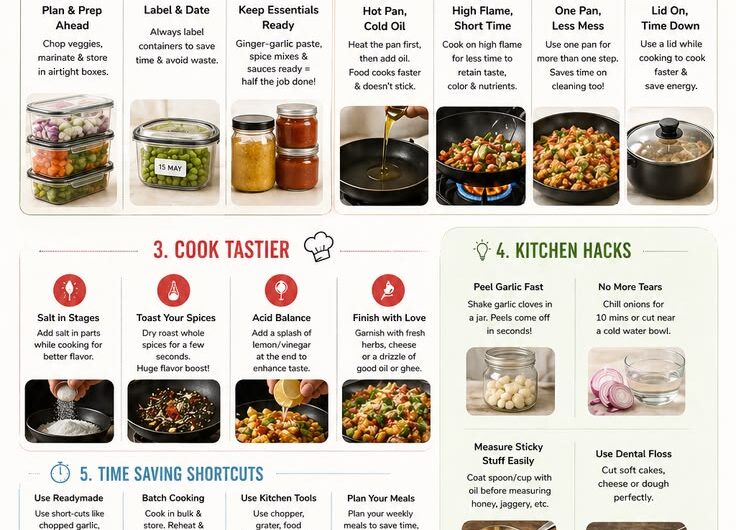
Cooking Hacks Every Beginner Should KnowForever
4
servings15
minutes25
minutes180–250
kcalA simple beginner-friendly guide filled with practical kitchen hacks to make everyday cooking easier, faster, and less stressful. Perfect for home cooks learning basic confidence in the kitchen.
Ingredients
4 medium onions (halve for 2 people, double for larger groups)
8 garlic cloves (adjust as needed)
½ cup cooking oil
2 tsp salt
1 tsp black pepper
1 tbsp mixed spices
Fresh herbs (optional)
Directions
- Chop all ingredients before starting cooking.
- Heat oil slowly and sauté onions and garlic until golden.
- Add spices and mix well with gentle stirring.
- Let everything simmer on low heat for a few minutes and rest before serving.